

A resin bonded anchor, also called a chemical anchor or chemical fixing, is a steel element, usually a threaded rod or reinforcing bar, held in a drilled hole by a bonding mortar, such as an injected vinylester or epoxy resin, that hardens after installation. A threaded rod can fix a baseplate to concrete; a reinforcing bar can connect new reinforcement to an existing member. Both transfer load by bond, but they are assessed and designed differently.
Load transfer by bond
The hardened mortar interlocks with the thread of the rod or the ribs of the bar and bonds to the hole wall. Under tension, force passes from the steel through the mortar into the concrete along the embedded length.
The bond therefore depends on both interfaces. Drilling dust left on the hole wall separates the mortar from the concrete and reduces the bond resistance; air voids in the mortar leave part of the embedded length without load transfer.
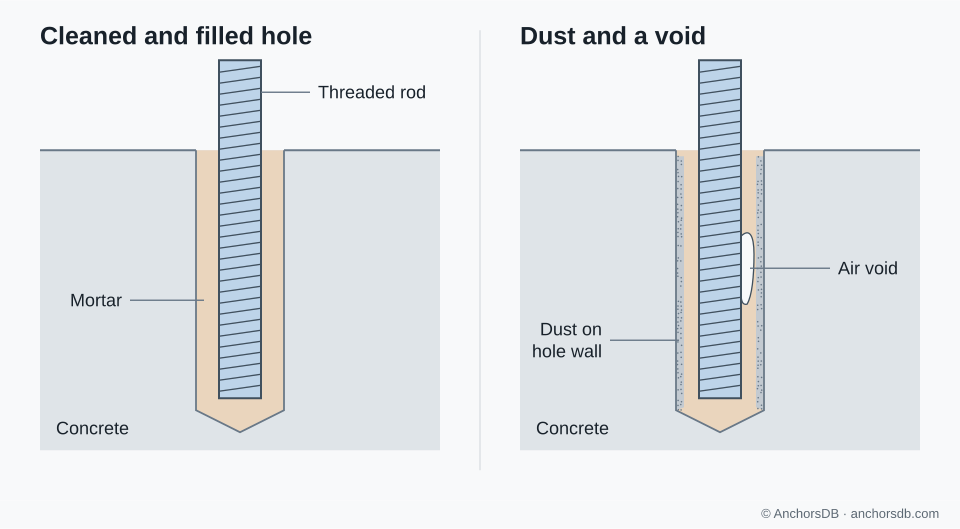
Figure 1. A cleaned and filled hole compared with retained dust and an air void. Annulus width exaggerated.
Anchoring and post-installed rebar connections
For a baseplate or bracket, the bonded element acts as an anchor and transfers tension and shear from the fixture into the concrete. Threaded rods are usual, although some systems also cover reinforcing bars and internally threaded sleeves as anchor elements.
For a wall or slab extension, bars are bonded into the existing member and cast into the new concrete. These post-installed rebar connections develop the bar force through an anchorage length or a lap with existing reinforcement. Bar length, cover, spacing, the position of existing bars and force transfer across the construction joint form part of the reinforcement design.
A resin system can have separate European Technical Assessments (ETAs) for the two uses: one for bonded anchors, issued under EAD 330499, with data for fastening design, and one for post-installed rebar connections, issued under EAD 330087 or EAD 332402, with data for anchorage and lap design. The permitted hole conditions can differ between them.
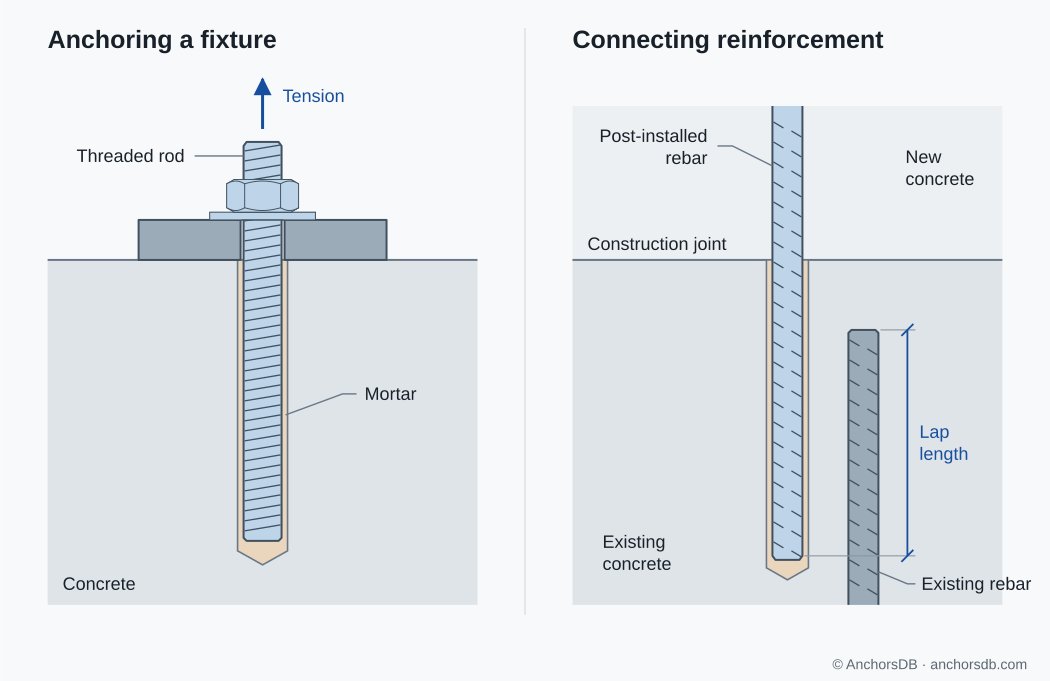
Figure 2. Bonded fixture anchorage and a post-installed reinforcement lap.
Hole preparation and filling
Drilling and cleaning produce the surface to which the mortar bonds. Hammer-drilled and diamond-cored holes need different preparation, including roughening of cored holes where the ETA requires it. Dry, wet and water-filled holes are separate installation conditions, each with its own data. See hole cleaning for the effect of dust on bond.
For injection systems, the two components mix in a static mixer nozzle as they are dispensed:
- The first mortar from a new nozzle is discarded until it has a uniform colour.
- The hole is filled from the bottom, with the nozzle withdrawn as it fills, so that no air is trapped. Deep holes need mixer extensions, and the installation instructions require piston plugs for stated hole diameters, depths and orientations, including overhead holes.
- The clean rod or bar is inserted to the required depth within the working time, with the motion specified for the system, usually a slight turning.
Capsule systems contain a measured charge of resin, hardener and aggregate, which is mixed by driving the rod in with rotary hammering.
Working time and curing time
Working time is the period available to fill the hole and position the steel. Curing time is the period after which the anchor may be tightened and loaded; the rod or bar is left undisturbed until then.
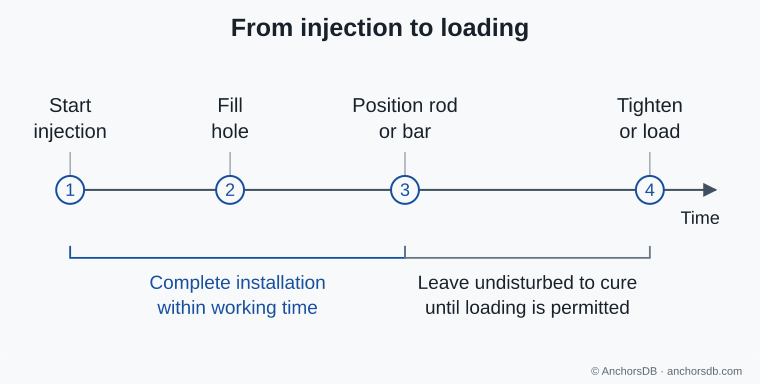
Figure 3. Installation stages before loading.
Both times depend on the concrete temperature. Low temperatures extend the curing time; high temperatures shorten the working time. The installation instructions give both for each temperature range and the permitted installation temperatures.
Embedment, temperature and sustained loading
Injection systems allow the embedment to be chosen within the range given in the ETA, using resistance data for the concrete condition, service temperature and loading. A deeper embedment requires adequate member thickness, spacing and edge distance. Development and lap lengths of rebar connections follow the reinforcement design.
Under tension, the resistance is limited by steel failure, combined pull-out and concrete failure, concrete cone failure or splitting. Under shear, steel failure, concrete edge failure or pry-out can govern.
Bond resistance decreases as the service temperature rises. The ETA gives resistances for temperature ranges, each defined by a maximum long-term and a maximum short-term concrete temperature. Under sustained tension, the mortar also deforms slowly by creep. The ETA gives a factor for this effect, and EN 1992-4 reduces the bond resistance according to the proportion of the tension that is sustained. A fixing carrying permanent tension near a heat source is therefore affected by both conditions. See sustained loading, creep and fatigue.
The ETA for an anchor identifies the steel elements, installation conditions and resistance data that belong to the assessed system.