

Holes for post-installed anchors are made by hammer drilling, by hammer drilling with a hollow bit and dust extraction, or by diamond core drilling. The method determines the hole diameter, the roughness of the hole wall and the dust or slurry left in the hole. These govern how an expansion anchor or screw engages the concrete, how a bonded anchor develops bond, and which cleaning is required. The European Technical Assessment (ETA) of the anchor states the drilling methods for which its resistance data apply.
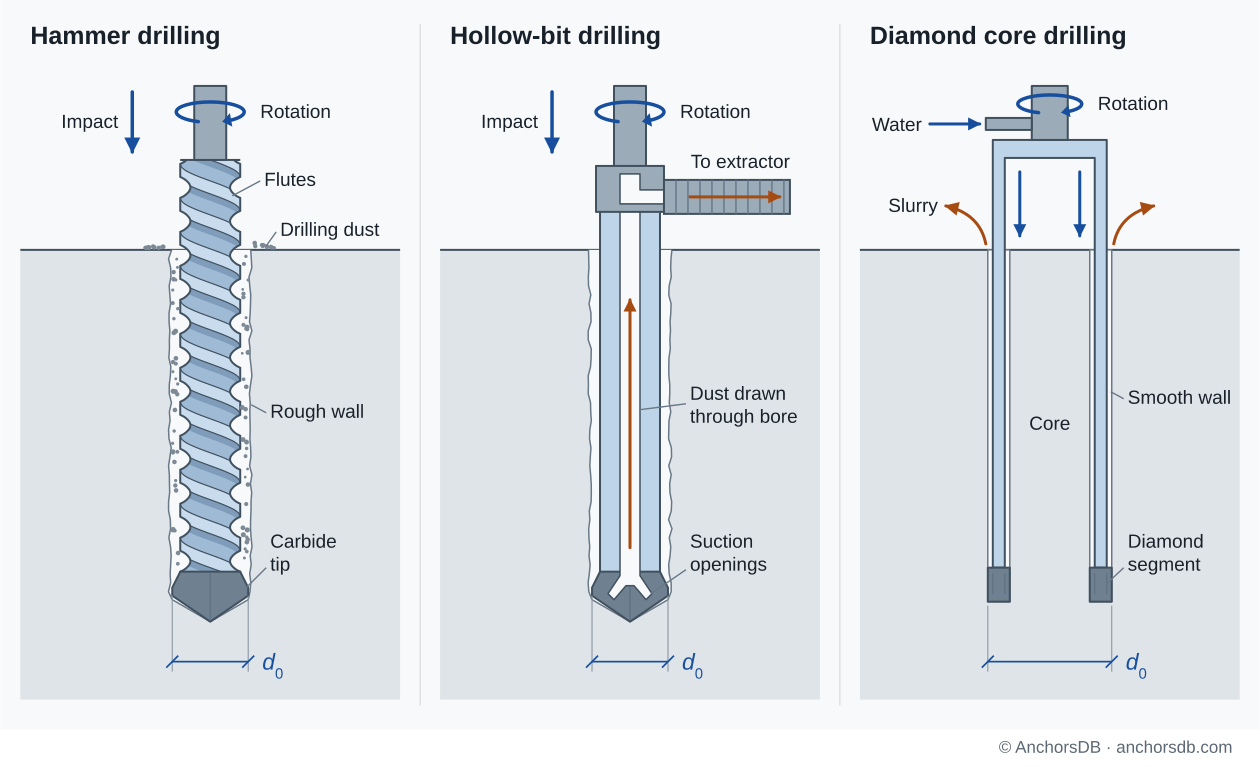
Figure 1. Sections through the three drilling methods, to the same scale.
Hammer drilling
A rotary hammer combines rotation with high-energy impacts. The carbide tip of the bit breaks the concrete at the bottom of the hole, and the spiral flutes carry the debris towards the surface. Hammer drilling is the usual method for anchor holes in concrete. It produces a rough hole wall and leaves drilling dust in the hole, which is removed by the cleaning procedure in the manufacturer's installation instructions.
Anchor function depends on the hole diameter, which is set by the diameter across the carbide tip. EN 1992-4 assumes bits that comply with ISO 5468 or an equivalent national standard; conforming bits usually carry a mark. A worn tip produces an undersized hole, which can prevent the anchor from being inserted or set correctly; an oversized hole reduces the expansion or thread engagement of mechanical anchors. Holes are drilled perpendicular to the concrete surface unless the installation instructions state otherwise.
Hollow-bit drilling with dust extraction
A hollow bit uses the same rotary hammer action. Dust is drawn through openings near the cutting tip and along an internal passage to a vacuum extractor, so the hole is cleaned as it is drilled and less dust is released around the operator.
Where the ETA includes hollow-bit drilling, the extraction can replace the separate blowing and brushing steps. The permitted bit and extractor combination, the required extractor suction and clear passages in the bit are then part of the installation procedure.
Diamond core drilling
A diamond core bit is a hollow barrel with diamond segments at its cutting edge. It removes concrete by abrasion as it rotates, cutting an annular groove and leaving a core that is removed afterwards. Wet coring uses water to cool the bit and carry the cut material out as slurry; dry coring bits operate without water. Coring produces little vibration and is used for large-diameter holes and where existing reinforcement is to be cut.
The actual hole diameter depends on the diameter of the segments, which EN 1992-4 requires to comply with the prescribed value. The hole wall is considerably smoother than a hammer-drilled one. For resin bonded anchors, the smoother wall and any remaining slurry can reduce the bond resistance. For some resin systems, the ETA covers diamond-cored holes only after the wall has been roughened with a special tool; for others, it covers them without roughening. Diamond-cored holes are cleaned by the procedure specified for that drilling method.
Reinforcement and aborted holes
A diamond bit cuts through reinforcing bars of any diameter without difficulty, so a bar can be severed without the drilling being stopped. Bar positions are therefore located before drilling, and cutting structural reinforcement requires the agreement of the responsible engineer. In prestressed concrete, EN 1992-4 requires a distance of at least 50 mm between the hole and the prestressing reinforcement. When a hammer bit strikes a bar, drilling is normally stopped and the hole is moved. An aborted hole is filled with non-shrinking mortar with a strength at least equal to that of the concrete and not less than 40 N/mm²; it may then be neglected in the design. The ETA can also specify a minimum distance between an aborted hole and the new hole.
Change of drilling method
The ETA gives separate installation conditions, and in some cases separate resistances, for each drilling method. Changing from hammer drilling to diamond coring for the same anchor can therefore reduce the available resistance or add preparation steps, and a method absent from the ETA is outside its scope. See what is an ETA for an anchor? and, for preparation of the bond surface, why drill-hole cleaning matters for bonded anchors.