

The installation torque, often called the tightening torque, is the torque specified in the European Technical Assessment (ETA) for tightening the nut or bolt of an anchor. It produces a tensile force in the anchor, the preload, and an equal clamping force pressing the fixture against the concrete. In some anchors the same tightening also sets the anchor. The torque is the controlled quantity on site; the preload it produces depends on friction and varies widely.
Function of the torque by anchor type
| Anchor | Effect of the installation torque |
|---|---|
| Torque-controlled expansion anchor (throughbolt, heavy-duty sleeve anchor) | Draws the cone into the expansion element, presses it against the hole wall and clamps the fixture |
| Bonded anchor | Clamps the fixture after the mortar has cured; the ETA gives a maximum torque |
| Concrete screw | Seats the screw head on the fixture; further turning shears the threads cut in the concrete |
| Undercut anchor | Clamps the fixture; for self-undercutting types, the setting procedure in the ETA also forms the undercut |
| Drop-in (deformation-controlled) anchor | Clamps the fixture after the anchor has been expanded by driving; the ETA gives a maximum torque |
In a concrete screw, the torque stays nearly constant while the screw cuts its thread, then rises steeply once the head reaches the fixture. Turning beyond the peak shears the concrete threads and the torque falls towards zero. Most concrete-screw ETAs permit setting with a tangential impact screwdriver up to a stated maximum torque output; the installation torque for a torque wrench is likewise a maximum value.
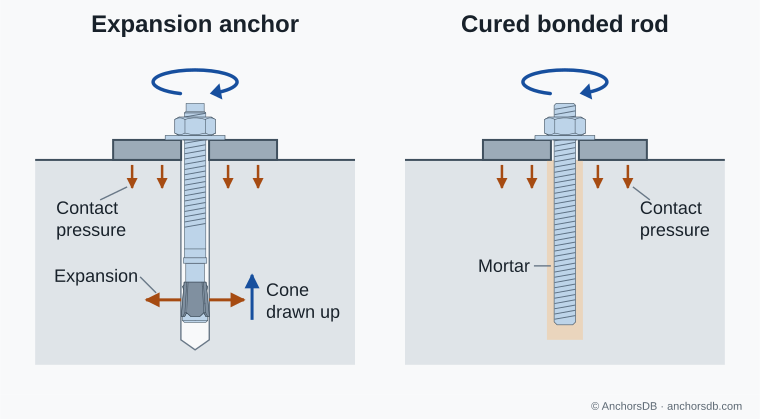
Figure 1. Tightening a torque-controlled expansion anchor and a cured bonded rod.
Preload and clamping force
The preload produced by a given torque depends on the friction in the thread and under the nut or bolt head. Lubricated, dirty or damaged threads and washers therefore give different preloads at the same torque. The specified torque is applied with a calibrated torque wrench where the connection is safety-relevant.
Clamping requires the nut or washer to bear on the fixture. If the sleeve of a sleeve anchor projects above the concrete and bears against the washer or fixture, the preload is carried within the anchor and no clamping force develops. Correct setting depth and a clearance hole sized for the sleeve avoid this; some sleeve anchors have a collapsible section that lets the sleeve shorten so that the washer clamps the fixture.
Excessive torque can yield the bolt, shear the threads of a screw or split the concrete. EN 1992-4 avoids splitting during installation through the minimum edge distance, spacing and member thickness in the ETA, which apply to the specified torque. Insufficient torque leaves an expansion anchor incompletely expanded and the fixture unclamped.
Loss of preload after installation
Preload falls after tightening as thread irregularities settle and the highly stressed concrete at the expansion or bearing zone creeps and relaxes. The largest loss occurs within minutes and hours. In tests on expansion and undercut anchors in uncracked concrete, the residual preload fell to about 40–50 % of the initial value over time. The loss depends mainly on the free length of the bolt over which it is stretched.
Re-tightening to the specified torque after a few hours or days restarts the relaxation, with a smaller loss each time, and raises the residual preload. Repeated tightening without a torque wrench can draw an expansion anchor progressively out of the hole, so any re-tightening follows the procedure permitted for the system.
A crack through the anchorage removes most or all of the residual preload, as the anchor displaces to bridge the crack. In bonded anchors, the preload decreases from the concrete surface to zero along the embedment, and it falls faster, further and less predictably than in mechanical anchors. A torque reading taken after installation includes the breakaway friction in the thread and does not indicate the remaining preload.
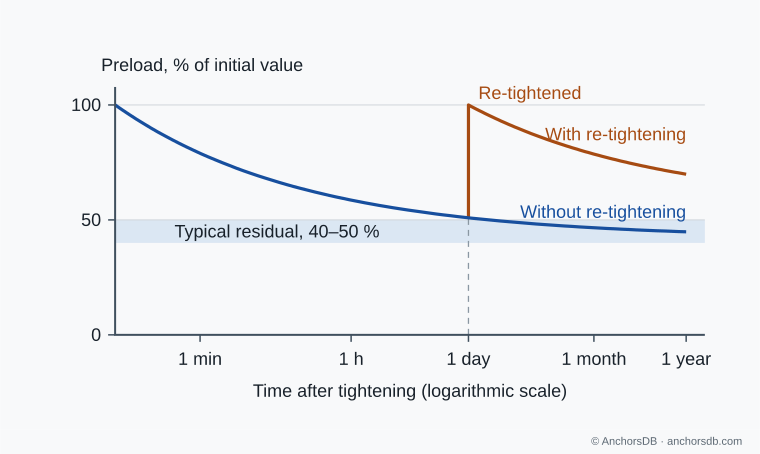
Figure 2. Preload of expansion and undercut anchors in uncracked concrete. Schematic.
Clamping force and load transfer
An external tension load on a clamped fixture first reduces the contact pressure between fixture and concrete. Because the compressed concrete is much stiffer than the anchor bolt, the anchor force rises only slightly while contact remains. Once the load exceeds the clamping force, the fixture lifts and the anchor force increases in proportion to the load. Under shear, friction from the clamping force carries the load until the fixture slips and bears against the anchor.
EN 1992-4 neglects preload and friction when verifying resistance; the resistances in the ETA assume that the anchor was installed with the specified torque. Retained clamping keeps the fixture in contact with the concrete at service loads, which limits displacement. Under fatigue loading, it reduces the force range in the anchor; EN 1992-4 requires fastenings under fatigue loading to use anchors assessed for fatigue in their ETA, without annular gaps, secured against loosening and with a permanent preload throughout the service life.
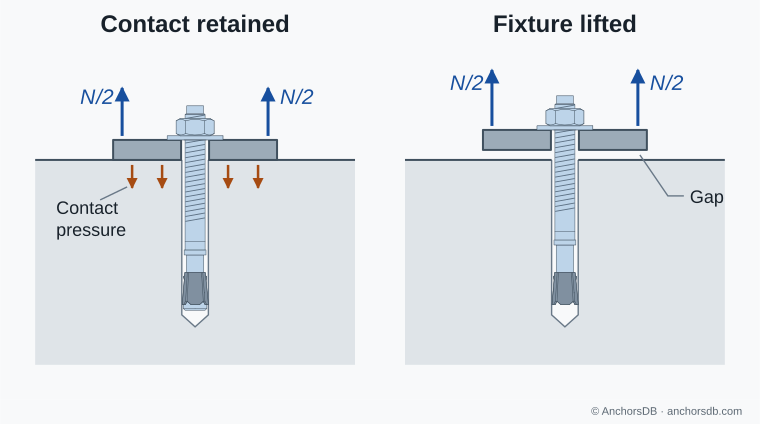
Figure 3. Fixture contact and separation under tension. Gap exaggerated.
For the setting mechanism, see throughbolt expansion anchors. For displacement of the complete connection, see anchor displacement and stiffness, and for the verification of resistance, how an anchor design check works.